
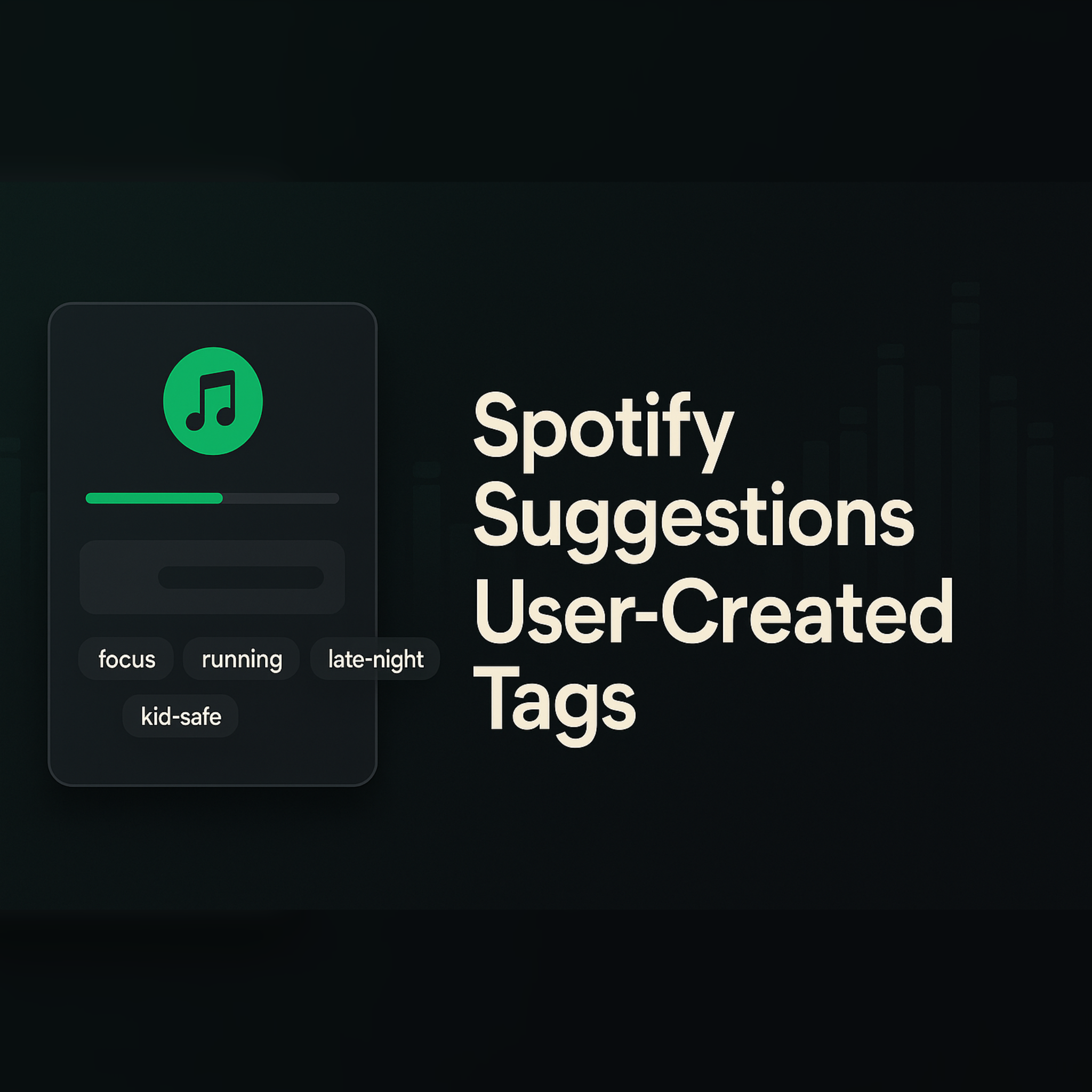
The Missing Spotify Feature: Custom Tags for Smarter Playlists
I’ve been a Spotify Premium listener for over a decade. Before that, I was deep into iTunes—obsessively organized libraries, meticulous sorting, and endless playlists. When I moved to Spotify, I happily traded that control for instant access and effortless discovery. But one piece of that old world still feels missing: user-created tags.
Spotify’s product has evolved impressively over the past 10 years. From Discover Weekly to Daily Mixes, the platform’s curation is usually on-vibe. Still, I’m astonished this specific feature isn’t here yet. Giving listeners the ability to tag songs, albums, and artists would meaningfully improve personal organization and turbo-charge Spotify’s recommendation engine.
Why tags matter (for listeners)
- Personal organization: Tags make it easy to group music across genres and moods: running, late-night, focus-no-lyrics, 80s-summer, kid-safe.
- Flexible filters: Want acoustic + morning + low-BPM in one click? Tags are natural filters.
- Faster playlist building: Instead of copy-pasting between playlists, apply a few tags and let auto-playlists assemble themselves.
Why tags matter (for Spotify)
- Better signals for models: Tags are high-intention data. When a listener adds study or dinner-party, that’s more precise than a skip metric.
- Smarter playlists at scale: Aggregate tags would surface micro-contexts Spotify can’t always infer from audio analysis alone.
- More time in app: The more relevant the next song feels, the longer users listen. That’s good for retention and ad-supported revenue.
“But people might misuse tags…”
Some will. Someone will label a death-metal track as kid-friendly. That’s fine—in the aggregate, noise gets washed out:
- Weight tags by confidence (how many users applied them), consistency (do taggers use similar tags elsewhere?), and outcome (do sessions lengthen when that tag is used?).
- Keep tags private by default; allow opt-in sharing to a public tag pool.
- Offer soft moderation: merge obvious duplicates (workout vs gym), down-rank outliers, and let users report bad tags.
How it could work (a simple UX)
- Add tags anywhere: On song, album, artist pages—tap “Add tag”.
- Autosuggest + free-form: Show common tags as chips; allow custom text.
- Saved filters: Combine tags into reusable filters (low-fi + focus + <90 BPM).
- Auto-playlists: Let users generate dynamic playlists from tag rules.
- Privacy controls: Private by default; choose to contribute anonymized tags to the public pool.
- Cross-device & API: Tags sync everywhere and are available for power users via API (rate-limited).
Edge cases & safeguards
- Spam & duplicates: Fuzzy matching and synonym merging (lofi, lo-fi, low-fi).
- Performance: Store tags as lightweight references; index popular tags; lazy-load infrequent ones.
- Kids & content: Respect content ratings; public tag pools exclude accounts marked as under-18.
The kicker: tags improve discovery and the business
Tags are a rare feature that improves user experience and model quality simultaneously. They generate explicit, contextual data that complements implicit signals (skips, replays, saves). Better signals → better playlists → longer sessions → stronger retention and monetization.
It’s a small UI change with outsized impact. Let’s get it built.
Have thoughts on this idea? Would you use tags? Which tags would you add first—road-trip, writing, supper-party, nostalgia-2000s? Drop a comment; I’m collecting examples for a follow-up.